
The 7 warning signs
- A higher water bill with no change in how you use water.
- A moving water meter when every faucet and appliance is off.
- Warm or hot spots on the floor, often a hot-water line leak.
- The sound of running water when nothing is on.
- Damp carpet, warped wood or loose tile.
- New cracks in the floor or lower walls.
- Lower water pressure throughout the house.
Do the two-minute meter test
Turn off every faucet, the dishwasher, washer, ice maker and irrigation. Find your water meter (usually in a box near the street) and watch the dial or small leak indicator for a couple of minutes. If it moves, water is leaving the system somewhere.
What happens next
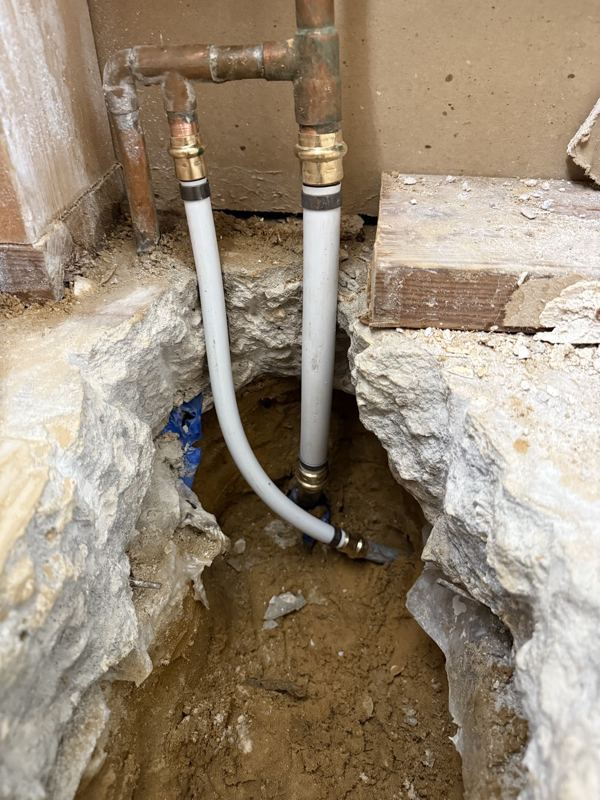
We confirm the leak, then bring in a leak-detection specialist to pinpoint it so any opening is small and in the right place. From there you have two main options: repair the spot through the slab, or reroute the line overhead or through walls and abandon the old section. We'll price both. See leak detection and water line repair.
When a repipe makes more sense
If the home has had more than one leak, the rest of the pipe is likely the same age and in similar shape. A whole-home repipe stops paying for leaks one at a time.
Need a plumber in Volusia County?
$99 diagnostic, waived with approved work. Firm price before we start.
Frequently Asked Questions
Is a slab leak an emergency?
If water is surfacing, the meter is spinning fast, or a floor is getting hot, yes: turn off the main water and call. A slow leak still needs prompt attention, since water under the slab can damage flooring and the foundation over time.
Does insurance cover slab leaks?
Many policies cover the cost to access the pipe and the resulting water damage, but not the pipe repair itself. Check your policy.